
Last updated: July 20, 2026 — tested on Claude Code v2.1.201, Max plan. This post will be updated after August 19 with measured before/after numbers.
Update (July 13): Hours after the July 12 deadline passed, Anthropic extended included Fable 5 access AND the +50% weekly limit boost a second time — both now run through July 19, 2026. The cliff described below didn’t happen today; same mechanics, new date. I’ll post my before/after /usage numbers when it actually lands.
Second update (July 20): extended again — the boost now runs through August 19, and a new Cowork promotion (limits 100% higher) runs through August 5.
If you use Claude Code on a Pro or Max plan, mark August 19 on your calendar: the temporary +50% weekly limit boost that’s been running since May 13 expires — originally scheduled for July 13, then July 19, now August 19. One detail most posts get wrong — that’s the only thing expiring. The 5-hour limit doubling from May 6 has no announced end date.
This guide covers how the two-limit system actually works (with screenshots from my own /usage), what specifically changes on August 19, what drains your quota fastest, and your options when you hit the wall.
TL;DR: Two counters — a 5-hour rolling window and a weekly cap, shared across claude.ai, Desktop, CLI, and IDE. On August 19 (pushed back three times from the original July 13), only the weekly boost expires: expect to hit weekly walls roughly a third sooner after it lands. Check where you stand anytime with /usage.
The two limits: 5-hour window vs weekly cap
Claude Code runs on two overlapping counters, shared across every Claude surface — claude.ai chat, Claude Desktop, the CLI, and IDE extensions all draw from one pool.
Here’s my actual /usage (type it in any session):
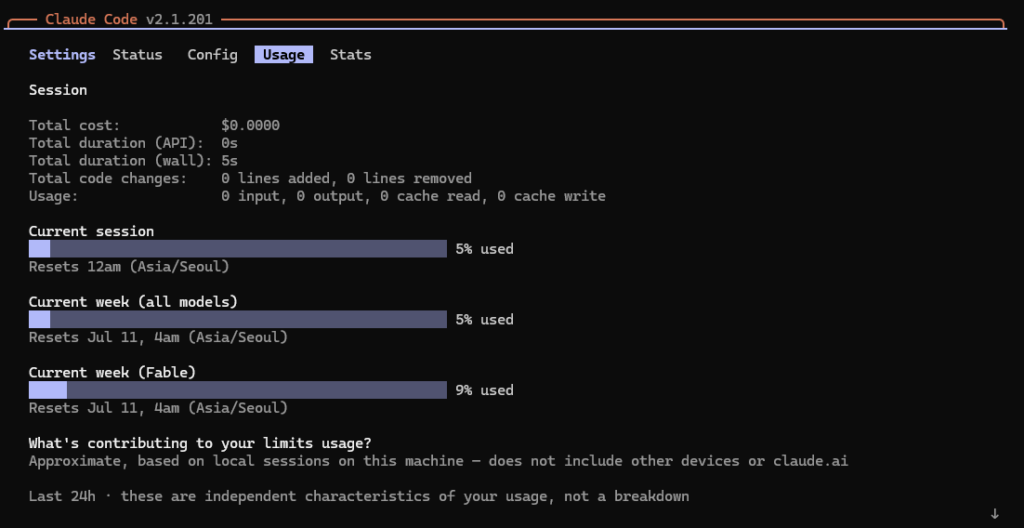
Three things worth decoding in that screen:
- “Current session” is the 5-hour rolling window. The counter starts at your first prompt, not on a fixed clock — and the reset time is displayed in your local timezone (mine shows Asia/Seoul).
- “Current week (all models)” is the weekly cap. It resets at a fixed day and time assigned to your account — mine is Saturday 4am KST, every week, regardless of usage. The “everyone resets Monday” claim you’ll see in some posts is a myth.
- The second weekly bar varies by plan. Anthropic’s docs describe it as a “Sonnet only” pool on Max plans — on my Max plan (which includes Fable 5), it shows as “Current week (Fable)” instead. Either way, the pattern is the same: an all-models pool plus a separate pool for the tier that burns quota differently.
August 19, 2026: what actually expires (and what doesn’t)
Anthropic made two separate limit increases in May, and conflating them is the most common error in posts on this topic:
- May 6: 5-hour session limits doubled for Pro, Max, Team, and seat-based Enterprise. Peak-hours reductions removed for Pro/Max. No expiry announced.
- May 13: weekly limits +50%, announced as running “through July 13.”
The boost was announced as running “through July 13” — then on July 13, in the same announcement that extended Fable 5 access (whose own deadline had already moved July 7 → 12 → 19), Anthropic pushed the boost’s end date to July 19 — and on July 19, moved it again to August 19. Whenever it does land, only the weekly boost ends. Practical effect: your per-session experience shouldn’t change, but if you routinely brush against the weekly wall, expect to hit it roughly a third sooner.
What happens after — full rollback to baseline or something in between — hasn’t been announced. I’ll update this post with my own before/after /usage readings once it lands.
Who’s affected: Pro, Max 5x, Max 20x, Team, seat-based Enterprise. API usage and usage-based Enterprise billing are separate.
Reading /usage like a pro
Scroll down in the /usage screen and there’s an attribution section: “What’s contributing to your limits usage?” — it breaks down recent consumption by skills, subagents, plugins, and MCP servers. Press d for the last 24 hours, w for the last 7 days.
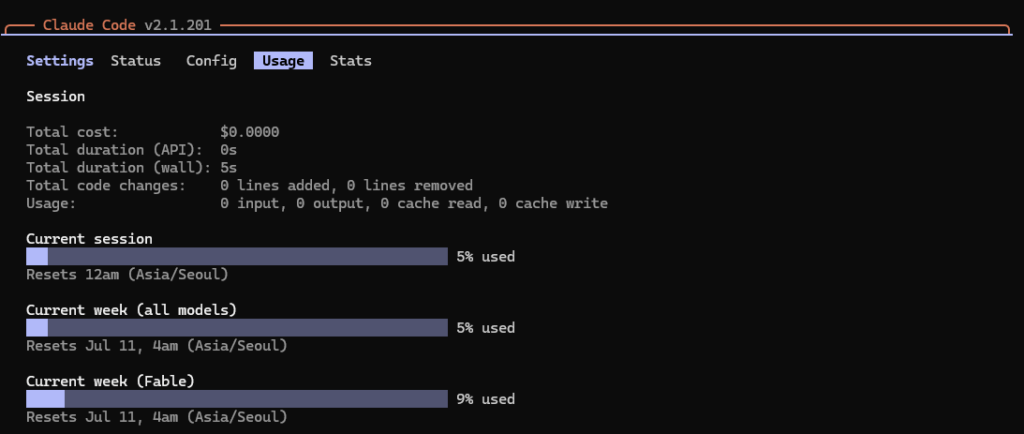
One caveat printed right on the screen: it’s “approximate, based on local sessions on this machine — does not include other devices or claude.ai.” The progress bars reflect your account-wide state; the attribution below is local-only.
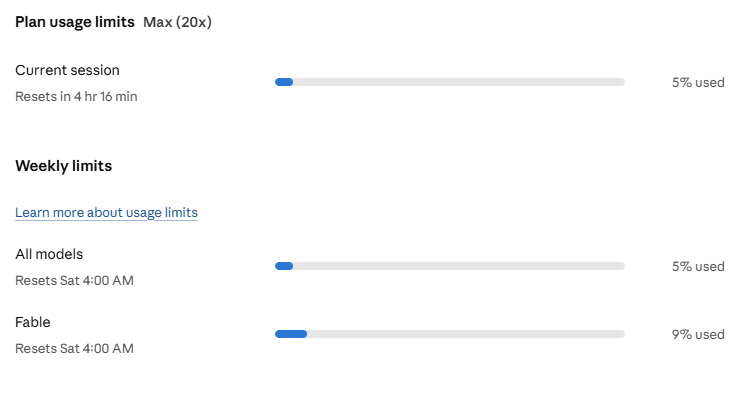
The same account-wide bars also live on the web at Settings → Usage:
What actually burns your quota
Ranked by impact, per Anthropic’s own docs:
- Model choice. Official wording: Opus “uses meaningfully more of your quota” and “costs several times more per turn than Sonnet.” No exact multipliers are published — treat any precise ratio you read as a guess. Since Sonnet 5 became the default (June 30), the default is the cheap path. (not seeing Sonnet 5 in your picker? here’s the fix)
- Extended thinking. On by default; thinking tokens bill as output tokens, with budgets that can hit tens of thousands per request. Dial down with
/effortor cap viaMAX_THINKING_TOKENS. - MCP servers. Tool definitions are deferred by default now, but MCP still costs more context than plain CLI tools.
- Agent teams — the real “7x.” That figure floating around applies to agent teams (each teammate is a separate Claude instance in plan mode), not regular subagents. Regular subagents are actually a saving technique — verbose output stays in the subagent’s context and only a summary returns.
- Long conversations. Auto-compact consumes usage. Anthropic’s single most effective lever:
/clearbetween unrelated tasks.
Hit the limit mid-task? Your options
- Read the reset time — the block message shows exactly when you’re back, and the 5-hour window is at most a coffee break.
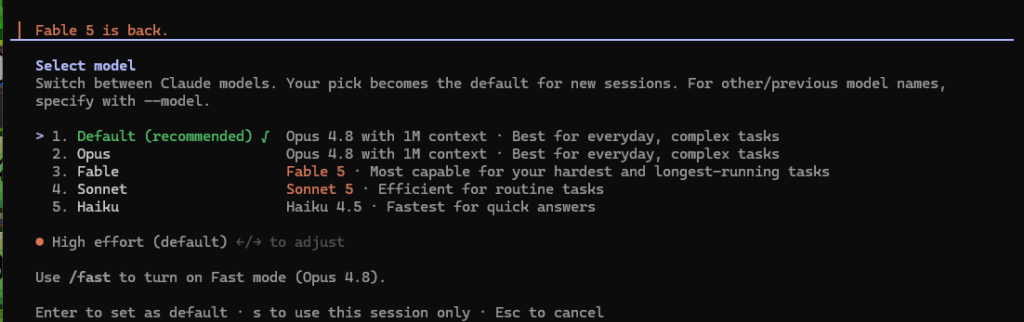
- Downshift the model.
/modelto a lighter model — on Max, the premium-tier pool and the all-models pool drain at different rates, so switching models can un-block you immediately.
- Turn on usage credits. The
/usagescreen shows the state (“Usage credits are off ·/usage-creditsto turn them on”). Enabled, prepaid funds bill at standard API rates after your included limits run out, with a monthly cap you control. Redemption is capped at $2,000/day. - Switch the session to API billing — Claude Code offers this explicitly; it never silently bills you. (Exception: a leftover
ANTHROPIC_API_KEYenv var can route you to API billing from the start — worth checking if your bills surprise you.) - Upgrade — Pro → Max 5x → Max 20x, prorated mid-cycle.
Pro vs Max: what the plans actually give you
Anthropic deliberately publishes no absolute token numbers — official language is “Max 5x provides 5 times more usage per session than Pro.” The last concrete estimates date to August 2025 (Pro ≈ 40–80 hours of Sonnet per week; Max 5x ≈ 140–280h; Max 20x ≈ 240–480h) — Sonnet-4-era numbers, before the May 2026 changes, so treat them as a stale baseline only.
I’m tracking a full week of my own /usage on a Max plan right now and publishing the day-by-day numbers — including whether someone with my usage pattern actually needs Max at all — in an upcoming Pro vs Max breakdown.
One open bug to know about (Max plans)
Issue #57050: users report usage of the non-premium model draining both weekly pools simultaneously. It’s labeled duplicate and remains unresolved. If your all-models bar climbs on days you only used the cheaper tier, you’re not imagining it.
FAQ
When exactly does my weekly limit reset? At a fixed day+time assigned to your account, shown in your local timezone in /usage (and at claude.ai Settings → Usage). It doesn’t shift based on your activity.
Does claude.ai chat usage count against Claude Code? Yes — one shared pool across claude.ai, Desktop, CLI, and IDE.
Does the August 19 change affect the 5-hour limit? No. Only the +50% weekly boost expires. The May 6 doubling of 5-hour limits has no announced end date.
Can I see what’s eating my quota? /usage → scroll to the attribution section → d/w to toggle the window. Local sessions only, but that’s usually where the surprises are (MCP servers and subagent-heavy workflows).
Can I buy my way past a limit? Yes — usage credits at API rates (/usage-credits), or switch the session to API billing.
Last updated July 20, 2026. This post will be updated after August 19 with measured before/after numbers once the weekly boost actually expires.
WorkflowDen is an independent site, not affiliated with or endorsed by Anthropic, PBC. Screenshots are from my own /usage on Claude Code v2.1.201.